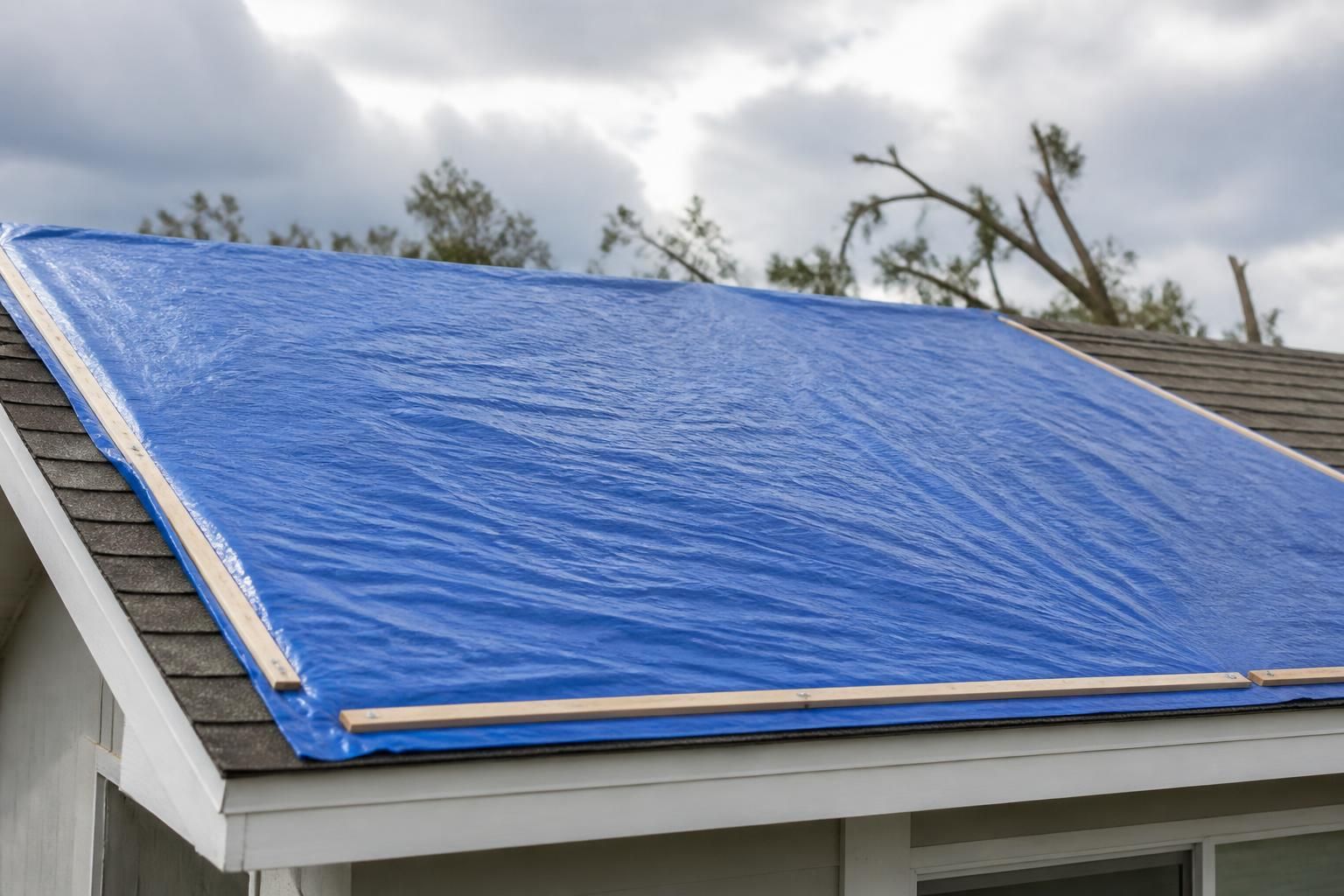
Water coming through the ceiling, missing shingles on the ground, or a roof section that looks torn open can leave a property exposed fast. When that happens, a temporary tarp can help reduce more water getting inside while you decide what repair comes next.
All Access Roofing And Safety provides roof tarping for property owners across San Antonio, TX who need a practical short-term barrier after roof damage, active leaks, or storm wear. We secure the affected area, help limit further intrusion, and keep the roof ready for the next repair step.
A tarp is useful when the roof has a clear opening or a damaged section that cannot be left uncovered. It is a short-term cover, not a repair, but it can buy time and reduce the risk of additional interior damage.
Common situations that call for tarping include:
We tarp the damaged portion of the roof so the exposed area is shielded as much as possible from rain and wind. The goal is to control the condition until a roof repair, reroof, or other permanent solution can move forward.
We target the damaged section rather than covering more roof than needed. That helps keep the tarp tighter and reduces unnecessary stress on surrounding materials.
The cover is placed with care so it stays positioned over the problem area instead of shifting with the next weather change.
We look at the surrounding roof surface, flashing, and visible wear so the tarp supports the existing damage rather than hiding additional concerns.
All Access Roofing And Safety starts by reviewing the visible damage and identifying where water can enter. That lets us decide how the tarp should be set so it protects the most vulnerable section of the roof.
This approach keeps the process direct and practical for homeowners, landlords, property managers, and business owners who need a temporary roof cover after damage.
If you are not sure whether tarping is needed, a few visible signs can point to exposed roofing that should not be left alone.
Even if the visible damage seems small, a roofing opening can let water travel farther than expected. Tarping helps reduce that spread until the source can be addressed.
A tarp is only the first step. Once the roof is covered, the damaged section still needs a lasting solution based on the roof system, the cause of the failure, and the amount of wear already present.
Depending on what we find, the next step may be:
We keep the next step clear so the property owner is not left guessing after the tarp is set.
Roof tarping has to account for the roof surface, pitch, and the type of damage present. Our work covers a range of roofing systems seen across San Antonio, TX and the surrounding area.
We work with asphalt shingles, metal roofing, modified bitumen, TPO, PVC, EPDM, concrete tile, and clay tile. Each system has its own vulnerable points, so the tarp setup needs to fit the surface rather than use a one-size-fits-all approach.
We also assist with residential roofing and commercial roofing needs, which is helpful when the damaged section is part of a house, building, or mixed-use property.
Roof openings can allow water to move into insulation, framing, walls, and interior finishes. The longer the opening stays exposed, the more opportunity there is for added damage and cleanup.
Quick tarping can help with:
For many property owners, the biggest value is time. A secure tarp gives you time to plan the right roof repair without leaving the structure open to the weather.
All Access Roofing And Safety serves San Antonio, TX along with nearby Central Texas communities. If a roof has been damaged and needs temporary coverage, we can help property owners move from active exposure to a controlled short-term solution.
We also serve surrounding areas such as Schertz, Cibolo, Canyon Lake, Bulverde, Kyle, San Marcos, Seguin, New Braunfels, Austin, and Round Rock. That makes it easier for owners managing more than one property to keep roof damage response consistent across locations.
If water is entering, shingles are missing, or a roof section is visibly exposed, a tarp is often the right short-term move until repairs can be arranged.
No. It can also help after leaks, fallen debris, failed flashing, or other damage that leaves the roof surface open.
No. It is a temporary cover that helps reduce further exposure while the underlying repair is planned and completed.
Yes, but the method depends on the roof type. Metal, shingles, membrane roofs, and tile surfaces all call for different handling.
If it is safe to do so, keep clear of the damaged area and note where water is entering. That information can help guide the coverage.
After the cover comes off, the roof area should move into the needed repair path, whether that means patching, replacement, or another roofing solution.
If your roof has been exposed and needs temporary protection, contact All Access Roofing And Safety for roof tarping support serving San Antonio, TX. We can help secure the damaged area and point you toward the next step for lasting roof repair.
Call +18062925815 to get started.

Get Started
Share what is happening with your roof or exterior property, and we will help you understand the next best step for repair, replacement, maintenance, or storm damage cleanup.